Summer’s end … Yellow buses are traveling down the streets, and you can feel the new sense of urgency to reach your final destination on time. Every school year calls me to reflect on the meaning and purpose of teaching.
Have you ever seen A Chef’s Life? Lee, my husband, and I started watching it when we lived in Kentucky as a reminder of his North Carolina roots. Now that we have returned to North Carolina, Chef Vivian Howard invites me to embrace Southeastern culture through food. Or, as she says it, “exploring the South one recipe at a time.”
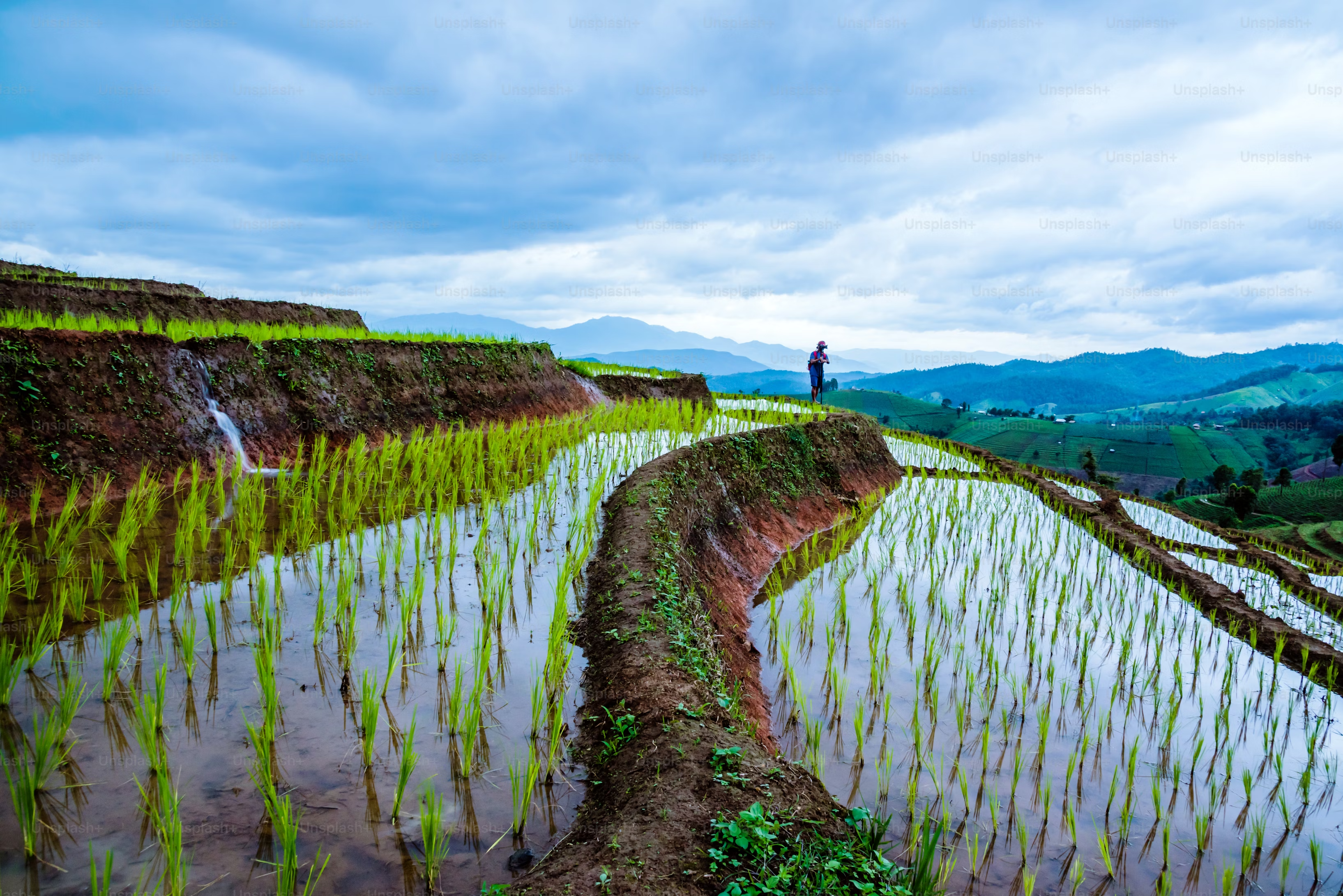
Theological education is like working a rice field by hand.
Vivian takes you on “Road Trip for Rice” to learn more about the art of preserving heirloom Carolina Gold rice and sustainable farming and eating. White settler colonists established rice plantations in coastal areas of the Carolinas in the 1720s. These farmers learned to cultivate rice from enslaved West Africans who were captured and forced into slavery largely due to their expertise. By the 1730s, rice emerged as a major commodity, and Carolina Gold rice was the mainstay of the local cuisine.
Cultivating a rice field by hand is painstaking work and requires a relationship with the land you farm, knowledge of what it can produce, an understanding of the creatures and plants it sustains, and a great deal of patience. Today, local farmers and farm-to-table restaurants preserve the art of heirloom rice cultivation because its preservation is about more than retrieving a memory from the past. Sustainable farming and farm-to-table restaurants are part of a growing resistance to globalized and industrialized farming because of the impact it has on the environment and local economies.
You are all likely aware of the not-so-quiet or subtle transformation of higher education across our nation. Many scholars and academic leaders cite the digital revolution accelerated by the pandemic and the lack of skills-oriented programming and efficiency within institutions of higher education as the primary causes.
Theological education witnesses to the inefficiency and impracticality of God’s grace …
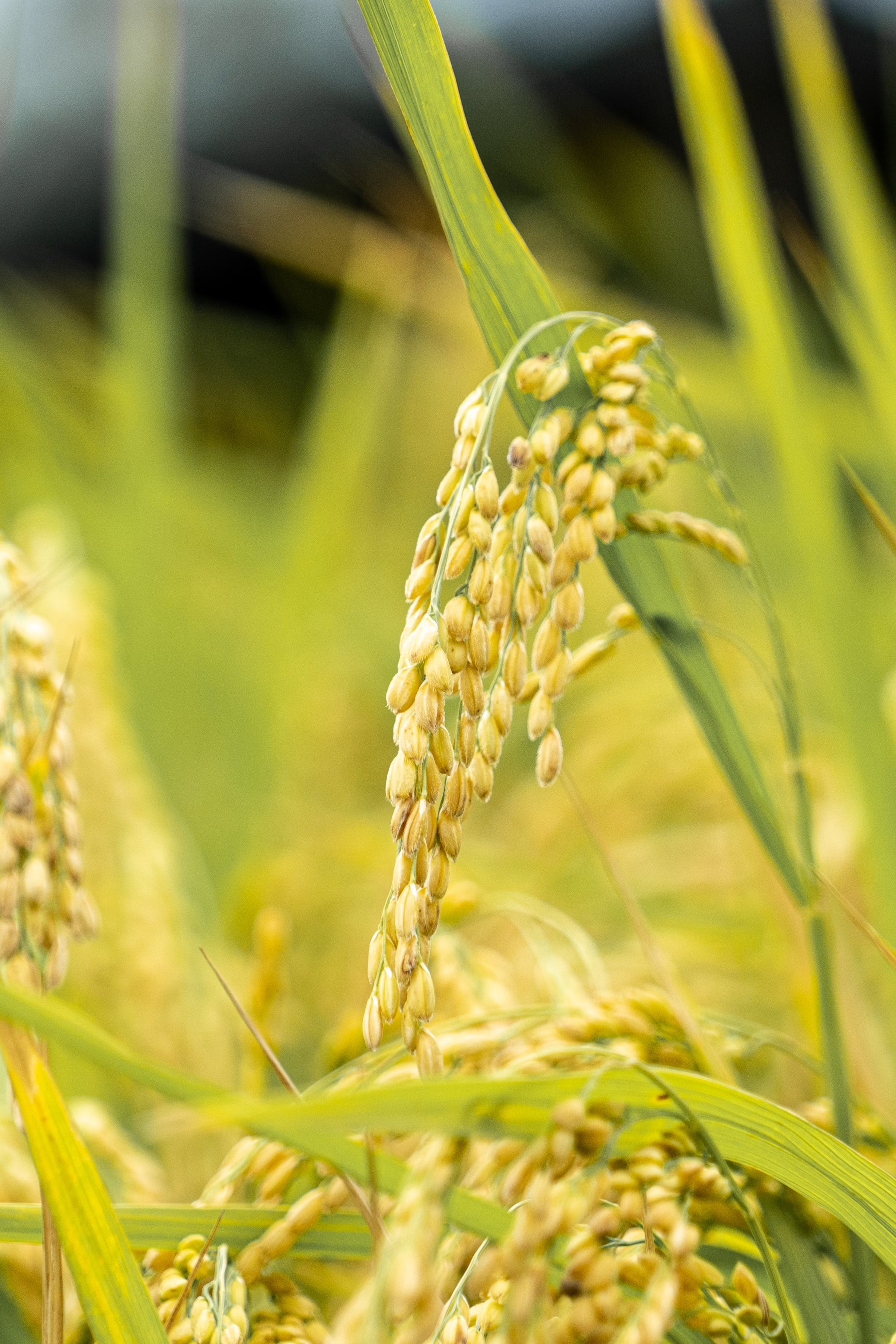
As the semester begins, I am mindful that theological education is like working a rice field by hand—every grain matters. Farmers (teachers and other partners) cultivate seedlings from season to season to produce the next crop, which provides the food we need for our tables sustainably. Industrial farms can’t do it in the same way.
Theological education witnesses to the inefficiency and impracticality of God’s grace and calls us into the painstaking and love-filled movements of accompaniment and repairing brokenness. Like a grain of Carolina Gold, theological education holds the story of people, places, and the injustices and triumphs of the ways we live together with the challenge to cultivate with and for each other the imagination and vision for authentic community. What are you passionate about cultivating in your work during these days?

 Creating Cultural Shifts