It is Friday. I know that many pastors and friends will be preparing to write sermons for Sunday morning. As you prepare, I invite you to consider ways to convey to the people of your congregation why the Reformed process of traditioning matters now.
You probably know that liberationist and postcolonial theologians scrutinize the writings of John Calvin and Reformed traditions identified with him because of the role that Calvinism played in settler colonialism, informing Manifest Destiny, and apartheid. These are justified critiques, and religious leaders and churches identifying as Reformed must learn, grow, and change as a result of them. At the same time, dealing honestly with the history does not negate the critical insights that Reformed traditions and other streams of religious thought offer us as we wrestle with our own experiences of clashing cultures. Mass migration, religious wars, typographical and technological revolution, and the expanding role of capital were defining features of Western European life in the 16th century. Grappling with how people reflect on the meaning and purpose of their past experiences is critical as we consider our responses to the circumstances we face.
Hundreds of political scientists believe that the U.S. and larger global community are trending toward authoritarianism. Authoritarianism can be seen as a manifestation of the 19th-century “Great Man” leadership theory, which suggests that exceptional leaders are just born that way. “Great Men” act with a sense of urgency and believe the end justifies almost any means. They “get ‘er done” and are dramatically altering democracy.
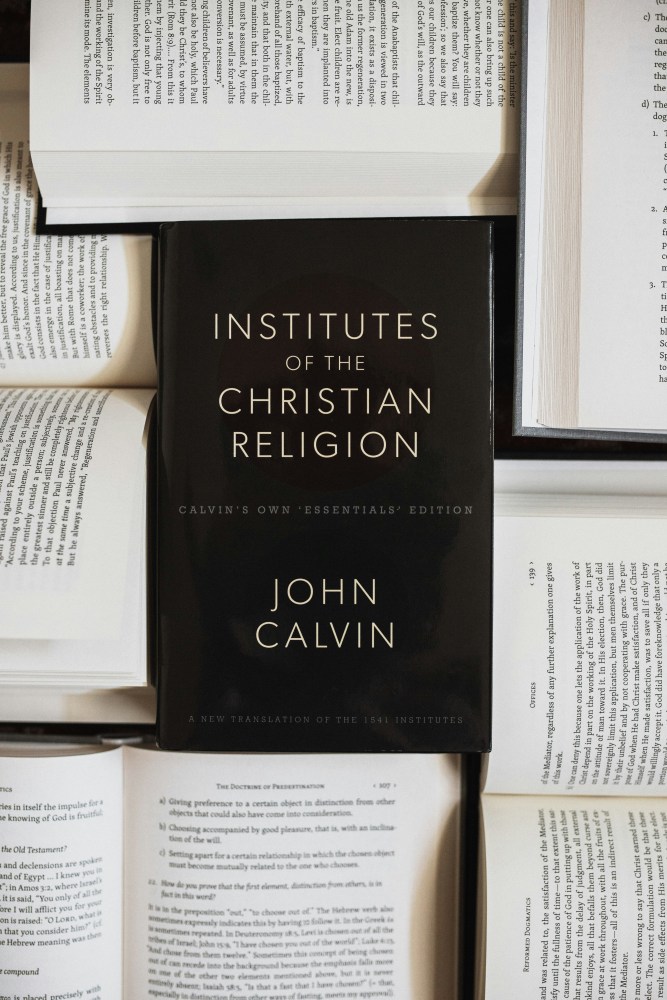
Photo by Caleb Woods on Unsplash
Reformers in the 16th century embraced the concept of a “priesthood of all believers” as a key to effecting change within their context. Human beings and the institutions we create, including churches, could not mediate God’s grace or love. The “priesthood of all believers” challenged the human tendency to deify one’s own character and to create idols. There is only One who fully embodies holiness of character—God alone. An awareness of this leads to embodying the teaching central to Jewish and Christian traditions:
“‘Love the Lord your God with all your heart and with all your soul and with all your mind and with all your strength.’ The second is this: ‘Love your neighbor as yourself.’ There is no commandment greater than these.” (Deuteronomy 6:4,5, Mark 12:30-31)
Authoritarianism, from a Reformed theological perspective, is a form of idolatry because it demands allegiance and loyalty to a leader and nation-state in the place of God. The theological concept of the “priesthood of all believers” may not initially seem to translate easily to the 21st century, and it may feel dated and strange to many people. Priests don’t lead Protestant churches, and the authority of the institutional church is waning in our society. But, the “priesthood of all believers” in the Reformed tradition isn’t only about those who serve as religious leaders; it is about the lives and vocation or “leadership,” to use language more familiar in today’s context, of all people—presidents, politicians, bakers, painters, parents, teachers, garment workers, pastors, and more. Social ethics in the Reformed theological tradition is built upon the leveling of ranks in churches and across the institutions of society, which is one of the reasons it changes and develops over time.
Progressive scholars, journalists, business leaders, and many others are calling for good moral leaders to emerge in this era of authoritarianism. “Moral” leadership may also sound threatening to some. However, those of a progressive inclination are not asking for leaders to put in place more rigid, restrictive sets of rules. They want leaders grounded in the awareness of the human tendency to overestimate one’s own holiness and to join others as an equal in the vocation of collaborating for the sake of the common good (neighbor love). That indeed will make us great.

Photo by Nathan Dumlao on Unsplash



 Creating Cultural Shifts